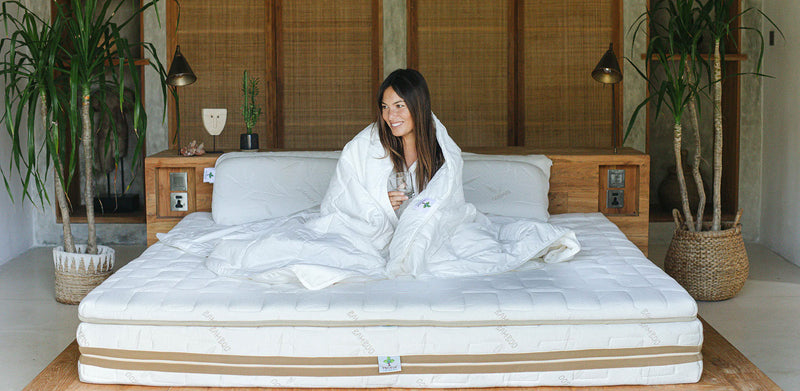
If you're an allergy sufferer in Singapore, you already know how much of a difference your bedroom makes. The warmth, the humidity, and the hours spent asleep can turn your bed into one of the harder places to breathe well, and no amount of tissues on the nightstand really fixes that. The mattress you sleep on is a bigger part of the picture than most people realise.
While no mattress can promise you an allergen-free room, natural latex is a genuinely different starting point, because it's naturally resistant to dust mites and mould. It's what we build every Heveya® mattress around.
Explore Heveya® Natural Latex Mattresses
Quick Overview
No mattress can be completely allergen-free, but the right materials make a real difference.
Dust mites, mould spores and pet dander are the most common bedroom allergy triggers.
Natural latex is naturally resistant to dust mites and mould, and its open-cell structure lets moisture escape.
Look for a breathable construction and a removable cover you can keep clean.
Simple habits help too: a HEPA-filter vacuum, washable curtains and keeping pets off the bed.
Heveya® natural organic latex mattresses come with a removable bamboo cover and a 100-day trial.
What Causes Allergies in the Bedroom?
Most bedroom allergies come down to a mix of dust mites, mould spores, and pet dander, and your bedroom probably has some of each. What matters is knowing where they build up, and which ones you can actually do something about.
Dust Mites
Dust mites are microscopic, they feed on the skin flakes we shed every day, and they thrive in warm, humid places. Which, if you live in Singapore, is basically your bedroom. They don't bite and they don't spread disease, but for anyone allergic to them, they're behind the runny nose, the sneezing, the congestion, and in more severe cases, worsened asthma.
What triggers the reaction isn't the mite itself; it's the proteins in their bodies and waste. And because we spend hours every night shedding skin into our bedding, our mattresses and pillows become some of the most concentrated places they live.
Mould Spores
Mould is one of the most overlooked triggers of bedroom allergies. If your symptoms are year-round and get worse during damp weather, mould may well be part of the picture. It's a fungus, and even when you can't see it, its spores are floating through the air, indoors and out. Warm, humid environments are exactly what it needs to spread.
A mould allergy is a reaction to the spores themselves, and the symptoms tend to sit in the upper respiratory tract, coughing, congestion, and sinus pressure. It's one of the harder allergies to pin down, because the spores are invisible and the reaction can look a lot like a common cold.
Pet Dander
Pet dander, the tiny flakes of skin your cat or dog sheds, is a common allergy trigger, and it moves around more than most people realise. A runny nose, itchy eyes, coughing, and sneezing are the usual signs.
The tricky part is how easily it travels. It clings to clothing, luggage, and furniture, so it can turn up in rooms your pet has never even been in. Which is why pet dander often shows up in bedrooms long after the pet has moved on, or in homes that don't have a pet at all.
How Do Dust Mites Affect Mattresses?
Because we shed skin flakes and lose a little moisture every night, mattresses can quietly become one of the friendliest places in the home for dust mites. Over the years, layers of padding, foam, and fabric can hold on to skin, dust, and humidity, all of which help mites build up. That's why the material a mattress is made from matters so much for allergy sufferers. A mattress that resists the conditions dust mites thrive in tends to stay cleaner and gentler on the body over time, even if no mattress can be described as completely dust-mite-free.
Why Natural Latex Is Resistant to Dust Mites
Natural latex comes from the sap of the Hevea brasiliensis rubber tree. The latex itself is a dense, uniform foam with no loose fibres or fill for skin flakes to collect in, and its open-cell structure lets moisture escape rather than build up. That gives dust mites fewer places to settle and less humidity to thrive in, which is why natural latex mattresses are often described as hypoallergenic. They don't promise an anti dust mite bed, but they do make it much harder for allergens to settle and build up over time.
How to Create a Lower-Allergen Bedroom
The good news is that there’s a lot you can do to give yourself relief from troublesome allergies. Although you can never get rid of every allergen particle, you can work to decrease them to a manageable level where your symptoms become less severe or frequent. When you follow these tips, bedtime need not cause you misery with extra coughing and sneezing.
1. Update Your Old Mattress with a New Latex Mattress
If your mattress is more than a few years old, it's worth thinking about what's been quietly building up inside it. A natural latex mattress with a washable cover is a much gentler starting point for allergy sufferers.
Naturally Allergen-Resistant Materials: Latex is naturally resistant to dust mites and mould, so allergens are less likely to settle and build up over time.
A Cleaner Start: Older innerspring and foam mattresses can hold on to years of dust mites, dander, and mould, which are almost impossible to remove once they're inside.
A Removable, Washable Cover: Every Heveya® latex mattress comes with a removable-cleanable cover, so you can wash it as you would your sheets and keep your sleep environment fresh.
A Hygienic Long-Term Choice: With good care, a natural latex mattress can stay a low-allergen space for years to come.
2. Avoid Upholstery in Your Bedroom
Your mattress is only part of the picture. Upholstered furniture can hold on to dust and dust mites over time, so if you have a dust mite allergy, pieces with smooth, wipeable surfaces are the easier choice. A solid wood bed frame can be dusted down in seconds. If you prefer the softness of an upholstered bed frame, choose a breathable natural fabric such as linen, and vacuum it regularly with a soft brush attachment.
3. Vacuum with Appropriate Filtration
Regular vacuuming is one of the simplest ways to keep allergens in your bedroom under control. For allergy sufferers, the type of vacuum you use matters just as much as how often you use it.
A HEPA-Filter Vacuum: Look for a vacuum with a HEPA filter, which traps fine allergens instead of blowing them back into the air.
A Weekly Routine: Vacuum your bedroom at least once a week, paying extra attention to any carpeted areas.
The Hidden Spots: Don't forget under the bed, along skirting boards, and inside wardrobes, where dust quietly gathers.
4. Manage Curtains and Blinds
Window treatments are easy to forget, but they can hold on to a surprising amount of dust and become a home for dust mites over time.
Washable Curtains: Choose washable fabrics over dry-clean-only ones, so they can be laundered regularly.
A Regular Washing Schedule: Wash your curtains often enough to keep dust from building up, especially during humid weather.
Easy-to-Clean Blinds: Look for blinds you can wipe down quickly, and keep a light routine of dusting them.
5. Keep Pets Off the Bed
We know it isn't easy, especially when they've already claimed their favourite spot. Even the most well-groomed pets carry dander, and their fur can hold on to pollen, dust, and other outdoor allergens.
Keeping pets off the bed, and ideally out of the bedroom altogether, is one of the kinder things you can do for your sleep. If that isn't possible, washing your bedding more often and vacuuming daily will help keep allergens in check.
How to Choose a Hypoallergenic Mattress in Singapore
The right mattress for an allergy sufferer isn't just about the material inside it. It's about how the whole mattress is built, cared for, and how well it holds up in Singapore's warm, humid climate. A few things are worth comparing before you decide which type of mattress is best.
1. Natural Latex vs Other Mattress Materials
Not every mattress is built to be anti-allergy. Before you buy one, here's how natural latex compares to other common mattress types at a glance.
2. Look for a Breathable Mattress Construction
In Singapore's climate, breathability isn't a luxury, it's part of keeping your sleep space fresh. A breathable mattress lets moisture escape rather than settle into the layers below.
An Open-Cell Material: Natural latex has a pinhole structure that allows air to move freely through the mattress.
A Ventilated Cover: A breathable cover made from natural fibres like organic cotton or bamboo helps regulate temperature and humidity.
3. Check the Mattress Cover and Cleaning Requirements
The cover is the layer that meets your skin every night, and the layer that catches most of the day's dust. A cover you can actually clean makes a real difference.
Removable and Washable: Look for a cover you can unzip and machine wash, so you can keep it as fresh as your bedsheets.
Natural, Breathable Fibres: Organic cotton and bamboo blends stay gentler on sensitive skin and allow the mattress to breathe.
Clear Care Instructions: A good mattress should come with straightforward washing guidance, so you can look after it well over the years.
What About Hypoallergenic Baby Cot Mattresses?
For little ones, the mattress matters even more. The right cot mattress should fit the cot snugly with no gaps around the edges, feel firm enough to support a young body safely, and be made from breathable materials that don't trap heat or moisture. A washable cover is a real help too, for the everyday spills and accidents.
Our Junior Baby Cot Mattress is made from natural organic latex, chosen for the same breathability and natural dust-mite resistance as our adult cooling mattresses, and comes with a removable cover for easy cleaning. As with any nursery decision, we always recommend checking current safety guidance for your child's age and stage.
Why Consider Heveya® for an Allergy-Aware Sleep Environment?
At Heveya®, we've built our sleep system around materials we truly believe in. Our natural organic latex is sourced from certified plantations, and its natural resistance to dust mites and mould is part of why so many of our customers come to us in the first place. Every mattress is finished with a removable-cleanable cover made from natural fibres, so you can keep your sleep environment fresh year after year.
We're proud to be a B Corp certified brand, and our sleep consultants in our Singapore showrooms are here to help you find the mattress that suits your body, your bedroom, and your sensitivities. It's premium sleep, made with care and made to last.
Rest Easier, Naturally
You don’t have to accept another restless night of watery eyes, runny nose, coughing and sneezing. There's so much you can do to make your bedroom a gentler place for your body, and it can start with the mattress you sleep on.
No mattress can promise an allergen-free space, but a Heveya® natural latex mattress is naturally resistant to dust mites and mould, with a breathable construction and a removable cover that give you a cleaner foundation to rest on. Every mattress comes with a 100-night trial, so you can live with the feel at home before you decide.
Explore our natural latex mattresses collection to find the one that suits you, or try them in person by visiting one of our four Singapore showrooms, where our sleep consultants are happy to help.
Frequently Asked Questions About Hypoallergenic Mattress
What's the best mattress in Singapore for allergy sufferers?
The best mattress for allergy sufferers is one made from materials that are naturally resistant to dust mites and mould, with a breathable construction and a cover you can keep clean. Natural latex is one of the strongest choices, and Heveya® mattresses are made from certified organic natural latex, with a 100-night trial and four showrooms across Singapore to try them in person.
What is a hypoallergenic mattress?
A hypoallergenic mattress is one made from materials that are less likely to trigger allergy symptoms, usually because they resist common allergens like dust mites and mould. Natural latex is a well-known example, thanks to its dense structure and natural resistance to both.
Is natural latex good for dust mite allergies?
Natural latex is one of the friendlier mattress materials for dust mites allergy sufferers. Its closed-cell structure doesn't give dust mites the moisture, warmth, or nesting space they typically need to build up.
Are latex mattresses resistant to dust mites?
Yes, natural latex is naturally resistant to dust mites. It isn't a promise of a dust mite-free mattress, but it makes it much harder for them to settle and multiply compared with mattresses made from foam or heavy fabric layers.
What should I look for in a mattress for dust mite allergy?
Look for a naturally allergen-resistant material like latex, a breathable construction that lets moisture escape, and a removable, washable cover. Together, they help keep your mattress fresher over the long term.
Can a mattress be completely allergy-free?
Honestly, no. No mattress can guarantee a completely allergen-free bedroom, because allergens live all around us. What a good mattress can do is make it far less easy for them to settle, build up, and reach you while you sleep.
How do I keep my mattress low in allergens?
Wash your mattress cover regularly, air your mattress out when you can, vacuum your bedroom weekly with a HEPA-filter vacuum, and keep your bedding clean and dry. A few small habits go a long way.
Are there hypoallergenic baby cot mattress options in Singapore?
Yes. Our Junior Baby Cot Mattress is made from natural organic latex, chosen for its breathability, natural dust-mite resistance, and washable cover. It's designed to give little ones a fresh, gentle space to rest.
Where can I try a mattress in Singapore?
You're always welcome atour Heveya® Singapore Flagship showroom at Eng Hoon Street or Heveya® Great World. Our sleep consultants will walk you through the range, help you compare firmness levels, and answer any allergy-related questions you have.