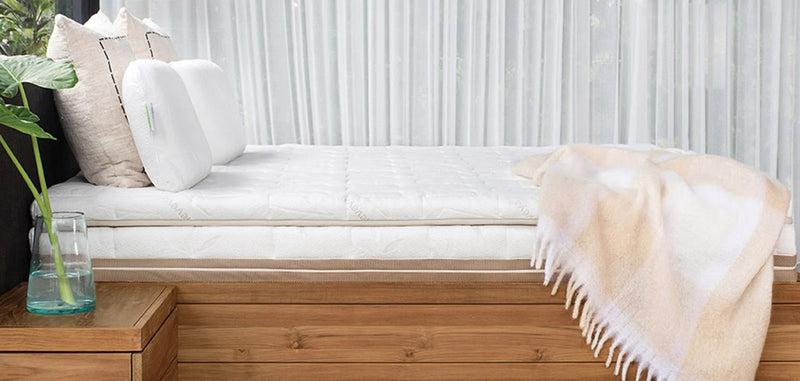
There is no single mattress that is best for everyone. The right one comes down to firmness, your sleeping position and body type, the material, the size, the support underneath and how it feels after a few nights rather than a few minutes. Budget matters too, though it should not be the first question you ask.
This mattress buying guide walks through 10 factors worth checking before you decide, from firmness and materials to warranty and trial terms.
Heveya® is a Singapore-headquartered sleep and wellness brand specialising in natural organic latex mattresses. Explore Heveya® mattresses, or visit a Singapore showroom to test the options with a sleep consultant.
Quick Overview
- There is no single best mattress for everyone. Comfort depends on firmness, your sleeping position and your body weight.
- Natural latex has a responsive, slightly springy feel and is naturally breathable, memory foam contours closely, and spring feels firmer and bouncier.
- Side sleepers usually prefer softer to medium, back sleepers medium to medium firm, and stomach sleepers firmer.
- Look beyond mattress height. Size, construction and the bed base all affect how a mattress feels and lasts.
- Compare brands on materials, certifications, warranty and trial terms, not on name or price alone.
- Heveya® offers a 100-night trial on all mattresses, and you can test them at any of our four Singapore showrooms.
How to Choose a Mattress: 10 Things to Consider
Work through these 10 points and you will have covered almost everything that matters in a buying a mattress guide.
- Comfort and personal fit
- Mattress material
- Mattress size
- Thickness and construction
- Bed base compatibility
- Firmness and sleeping position
- Materials, allergens and breathability
- Brand quality and evidence
- Warranty and durability
- In-home trial
1. Put Comfort First: Choose What Feels Right for You
Comfort is personal, and it is the one factor nobody else can decide for you. A mattress that suits your partner, your parents or a reviewer may feel wrong to you, and neither the price tag nor the brand name will tell you which way it will go.
What comfort actually depends on is firmness, material, your usual sleeping position, your body weight and your own preference for sinking in or lying on top. Mattress selection based on sleep preferences and comfort is the reason two people can lie on the same mattress and describe it completely differently.
So treat comfort as the starting point, then use the factors below to narrow the field.
2. Mattress Comparison: Natural Latex vs Foam vs Spring
A useful mattress comparison starts with what each material actually does, since feel, support and airflow vary more by construction than by category.
Natural Latex Mattresses

Natural latex has a responsive, slightly springy feel. It contours without the sinking sensation of foam, holds its shape well, and its open-cell structure lets air move through, which matters in a humid climate.
Memory Foam Mattresses

Memory foam contours closely and absorbs movement well, so it suits light sleepers sharing a bed. It responds slowly, which some like and others find hard to move on, and denser foams can sleep warm.
Spring and Innerspring Mattresses

Spring mattresses have a firmer, bouncier feel with good airflow through the coil layer, though performance varies widely with coil type and the comfort layers above.
Latex vs Foam vs Spring: Which Mattress Is Right for You?
Which type of mattress is best depends on how you sleep. Natural latex provides responsive support and breathability in a warm climate, memory foam provides close contouring and a still surface when sharing a bed. Meanwhile, spring mattresses offer a firmer, bouncier feel. Within any category, construction decides the result, so check how a mattress is built before you settle on the type.
If you are torn, test one of each in a single visit, since comparison is easier when the memory is fresh.
|
Natural latex |
Memory foam |
Spring |
|
|
Feel |
Responsive, slightly springy |
Close contouring, slow response |
Firmer, bouncier |
|
Breathability |
High, open-cell structure |
Varies, can sleep warm |
High, airflow through coils |
|
Pressure relief |
Contours without sinking |
Strong contouring |
Depends on comfort layers |
|
Motion transfer |
Low to moderate |
Very low |
Higher unless pocketed |
|
Durability |
Holds shape well |
Varies by density |
Varies by coil quality |
|
Suits |
Warm climates, contouring without sinking |
Light sleepers sharing a bed |
Sleepers who prefer lying on top |
3. Choose the Right Mattress Size
Start with your height, since the mattress should be longer than you are by a comfortable margin, then consider width against how much you move at night.
A queen suits most couples, though a king gives each person closer to a single bed's width, worth considering if either of you is a restless sleeper. Measure the room too, allowing space to walk around the bed.
Sizes also differ by market. For example, a Singapore King measures 183 x 190 cm, while an EU King measures 180 x 200 cm, so check the exact dimensions against your bed frame. Size also affects what you need underneath, since a larger mattress in a heavier material may need a sturdier base.
Some couples also need different firmness on each side, which a dual firmness mattress can accommodate within a single bed.
4. Mattress Thickness and Construction: Look Beyond Height
Thicker does not mean better. A tall mattress looks substantial while telling you little about how it will feel or last, and a very thick mattress is also heavier to handle and can make the bed awkward to get into.
What matters is inside: a comfort layer that shapes the initial feel, a support core doing the structural work, and a cover affecting breathability and cleaning. A thin comfort layer over a poor core softens unevenly, whatever the height.
Ask to see a cutaway or an unzipped cover. A brand confident in its construction will show you without hesitation.
5. Check Your Bed Frame and Mattress Compatibility
The frame affects how a mattress feels, how it is supported and how well it breathes. A good mattress on a sagging base will sag with it.
- Airflow underneath: Frames that let air circulate beneath the mattress help it stay fresh, while a solid base or a mattress on the floor can trap moisture. Many wooden bed frames in Singapore are designed with this in mind.
- Adjustable movement: An adjustable bed frame raises the head and legs, so check that your mattress is flexible enough to move with it.
Check your existing base before buying, and ask whether the warranty requires a particular support.
6. Choose Mattress Firmness for Your Sleeping Position
Firmness labels are not standardised. One brand's medium firm can feel like another's firm, so lying on it yourself is the most reliable test.
Mattress firmness and support for different sleeping positions generally works out like this.
- Side sleepers: Usually prefer softer to medium, which lets the shoulder and hip settle in while the spine stays level.
- Back sleepers: Tend to do better on medium to medium firm, enough support to hold the lower back without flattening its natural curve.
- Stomach sleepers: Usually need firmer, since a soft surface lets the hips drop and the lower back arch.
- Combination sleepers: Often land on medium, which is workable in every position.
Body weight shifts all of this: heavier sleepers need more support for the same feel. Spend at least 10 to 15 minutes in your usual position before deciding.
7. Consider Allergens, Hygiene and Breathability
It helps to know what you are sleeping on and how easy it is to keep clean.
Read the material label and ask what the comfort layers and core are made of. Ask about certifications, which show a material has been independently tested rather than simply described as natural.
Ventilation matters in Singapore. Materials that let air move through, and bases that allow airflow underneath, help a mattress stay fresh in a humid climate, which is why a cooling mattress usually comes down to construction rather than added cooling treatments.
A removable, washable cover makes care easier, so check whether it comes off and how it should be cleaned.
If you have sensitivities, natural latex is worth looking at, as it resists dust mites and mould without added chemical treatments.
8. Compare Mattress Brands on Quality and Value

Brand recognition and price are not evidence of quality. Comparing brands properly means looking at what each can show you.
- Material quality: What the core and comfort layers are made of, and in what proportion.
- Construction: How the layers are assembled, and whether you can see inside.
- Certifications: Independent testing carries more weight than marketing language.
- Firmness options: Whether the range covers your sleeping position and body type.
- Warranty and trial: Duration, coverage and what invalidates either.
- Service: Whether staff can answer material questions or only recite features.
Read reviews for recency, for sleepers similar to you, and for patterns. A consistent complaint across years matters more than one glowing review. For reference, Heveya® mattresses are made from certified organic natural latex in a modular construction, with dual firmness options and a 100-night trial.
9. Check Warranty and Long-Term Durability
A warranty tells you what a manufacturer will stand behind. Read the terms, not the headline number.
- Duration: Whether it is full-term or prorated, and what each year actually covers.
- Coverage: Sagging is the key one, and many warranties specify a minimum depth before a claim is valid.
- Exclusions: An unsupported base, a removed label or staining can void cover.
Durability comes from materials and construction rather than the warranty. Natural latex holds its shape well, while foams vary by density and springs by coil quality. Ask how a mattress is expected to age, not just how long it is covered.
10. Look for an In-Home Mattress Trial
A showroom tells you how a mattress feels for 10-15 minutes. A trial tells you how it feels after a fortnight, which is the more honest question.
If a brand offers a trial, check the terms.
- How long it runs, and any minimum period before you can exchange.
- What happens at the end: exchange, refund or credit.
- Whether you can change firmness rather than return the mattress.
- Whether a protector is required to keep the trial valid.
- Who collects it, and whether that costs anything.
Weigh the trial, durability and long-term comfort together, since a generous trial only helps if the mattress lasts beyond it.
What to Look for When Buying a Mattress in Singapore
Buying in Singapore adds a few local considerations.
- Breathability: Heat and humidity make this more important here. Materials and bases that allow airflow stay fresher and feel cooler through the night.
- Showroom testing: Test on the actual model, ideally with your partner, since a shared bed is a shared decision.
- Delivery access: Check before ordering. Lift dimensions, doorways and stairwells matter, particularly for larger sizes.
- Terms in writing: Confirm warranty and trial terms before you pay, including what happens if you want to change firmness later.
These mattress buying tips apply whichever brand you choose.
What Should First-Time Mattress Buyers Look For?
If this is your first mattress, the number of options is the hard part. A simple order helps.
- Set a budget range, then work within it.
- Let your sleeping position guide firmness.
- Narrow to two or three materials, then test them in person.
- Check trial and warranty terms before comparing prices.
- Compare at least two brands, so you have something to judge against.
- Buy on how it is built and how it feels, not on how familiar the name is.
First-time buyers often find natural latex a straightforward starting point, since it works across a range of sleeping positions. Heveya® sleep consultants can talk you through the differences in either Singapore showroom.
Frequently Asked Questions About Buying a Mattress
Which type of mattress is best?
There is no single best type. Natural latex suits sleepers wanting responsive support and breathability, memory foam those wanting close contouring and motion isolation, and spring those preferring a firmer, bouncier surface.
What type of mattress is best for side sleepers?
Side sleepers generally do best on softer to medium, which lets the shoulder and hip settle in while keeping the spine level. Latex and memory foam both work, depending on whether you prefer responsiveness or contouring.
Is natural latex better than memory foam?
Neither is better outright. Latex is more responsive, more breathable and holds its shape longer. Memory foam contours closely and isolates movement better. It depends on how you like a mattress to feel.
How firm should a mattress be?
Firm enough to keep your spine neutral, soft enough to relieve pressure at the shoulders and hips. Sleeping position and body weight shift the answer, which is why labels alone are unreliable.
How do I compare mattress brands?
Compare mattress material quality, construction, certifications, firmness options, warranty terms, trial conditions and service. Read reviews for recent, consistent patterns rather than one-off opinions.
Is it better to buy a mattress online or in-store?
In-store lets you test firmness before committing, which matters most for a first mattress. Online works if the brand offers a proper trial with a straightforward exchange.
How long should I test a mattress?
At least 10 to 15 minutes in your usual position in the showroom. At home, most people need two to four weeks to adjust before judging.
What should a first-time buyer look for?
Firmness that suits your sleeping position, a material you understand, a size that fits the room, and clear trial and warranty terms.